


You’ve got a logo or a hand-drawn design you’re excited to finally stitch, and then the first digitizing quote lands in your inbox: sixty, eighty, sometimes over a hundred dollars for one file. For a beginner just testing the waters, that number alone is enough to shelve the whole project before it even starts. Finding affordable embroidery digitizing that doesn’t tank the quality is one of the first real walls new stitchers and small shop owners run into, and most tutorials skip right past it like it’s not a real problem.
Here’s the thing though, the cost gap isn’t nearly as fixed as those first quotes make it look. Between free software, budget-friendly services, and a handful of smart habits around design complexity, beginners actually have more room to maneuver than the big-name pricing suggests.
This guide gets into where the real cost comes from, which cheap embroidery digitizing routes are genuinely worth trying, and the mistakes that quietly drive prices up before you’ve even placed an order.
Why Digitizing Costs What It Does in the First Place
Digitizing isn’t just running a file through some automated filter, even though it’s often marketed that way. A person, or a well-trained system, has to map out stitch type, direction, density, and underlay for every single section of a design, and that takes real time even on something that looks simple at a glance. A logo with fine text or a gradient can easily eat up an hour or more of a digitizer’s time.
In practice, price tracks complexity far more than it tracks how impressive the design looks on your screen. A bold, two-color logo with clean lines digitizes fast and cheap. A detailed illustration with shading and small text takes longer, needs more revision rounds, and costs accordingly. Understanding that connection early is honestly the biggest lever beginners have over their own bill.
Where to Actually Find Affordable Embroidery Digitizing
Beginner-friendly digitizing generally splits into a few categories, and each one trades something away for the lower price tag.
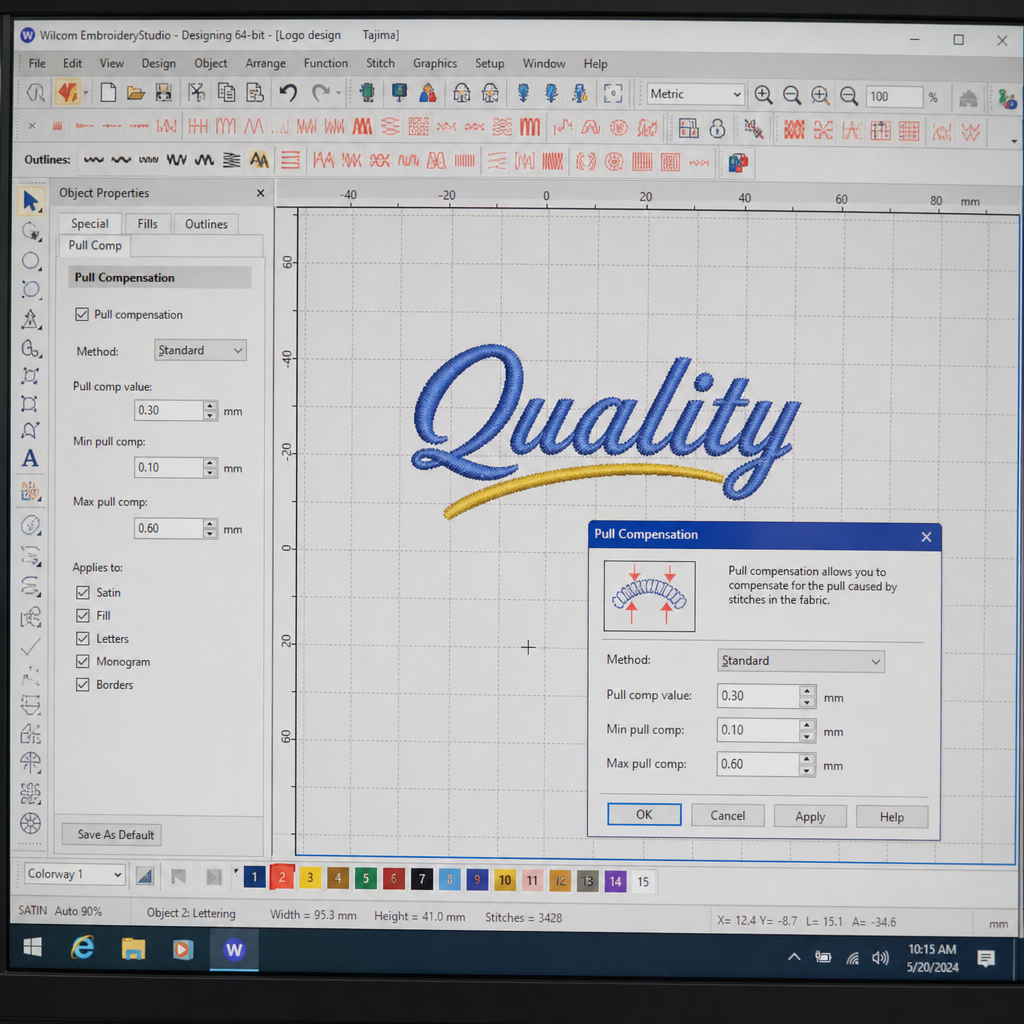
Free, open-source software like Ink/Stitch lets you digitize your own designs at no cost beyond the time it takes to learn it. The learning curve is real — nobody’s pretending otherwise — but for someone stitching occasionally rather than running a business off it, that time investment is usually worth it. Paid consumer software like Hatch Embroidery Basics sits in the middle, cheaper than the professional-tier tools and genuinely built with beginners in mind, though you’re still doing the actual digitizing work yourself either way.
Online digitizing services are where most beginners actually end up landing. Sites offering per-design pricing, often starting somewhere around five to fifteen dollars for a simple logo, hand the technical work over to someone experienced without the price tag of a full custom digitizing service built for commercial clients. Marketplace platforms like Fiverr and Etsy also host individual digitizers competing hard on price, which can genuinely work out well as long as you check reviews and ask for stitch-out samples before you commit to anything.
- Comparing Beginner Digitizing Options
| Option | Typical Cost | Best For | Trade-off |
|---|---|---|---|
| Ink/Stitch (free software) | $0 | Learning to digitize yourself | Time investment, learning curve |
| Hatch Embroidery Basics | One-time software cost | Regular hobbyist use | Still requires manual digitizing skill |
| Online digitizing service | $5–$15 per simple design | Quick, low-volume needs | Quality varies by provider |
| Marketplace freelancers | Varies widely | Budget custom work | Requires vetting reviews and samples |
| Full custom digitizing service | $30–$100+ | Complex, brand-critical designs | Higher cost, faster turnaround |
What Actually Makes Beginner Digitizing Cheaper
Simplifying the design before you send it anywhere is the single most reliable way to cut cost, full stop. Fewer colors, fewer tiny details, a smaller overall stitch count all of it reduces the time a digitizer actually spends on your file, and most services price directly off stitch count rather than some flat rate that doesn’t care what you’re asking for.
Bundling a few designs with the same provider tends to unlock a lower per-file rate too, since a lot of digitizers offer volume pricing once you’re past the first order or two. Being upfront about exactly what you need size, placement, fabric type in your very first message also cuts down on paid revision rounds, and that’s genuinely where a lot of “cheap” digitizing quietly turns expensive without anyone noticing until the invoice shows up.
Mistakes That Quietly Drive Digitizing Costs Up
A handful of habits push beginners into paying more than they ever needed to. Sending a low-resolution photo instead of clean vector artwork forces the digitizer to burn extra time just rebuilding the shapes before any real digitizing even starts, and that time gets billed to you, obviously.
Asking for unlimited revisions without a clear brief upfront is another one worth watching. Vague instructions lead to more back-and-forth than necessary, and providers who don’t cap revisions tend to just build that expected extra work into their base price from the start. Picking a service purely on the lowest quoted number, without checking an actual stitch-out sample first, tends to backfire too a badly digitized cheap file often has to get redone from scratch, which ends up costing more in the end than just paying a bit more upfront would have.
When Paying More for a Custom Digitizing Service Actually Makes Sense
Budget options work fine for simple, low-stakes designs. But there’s a real point where paying for a proper custom digitizing service genuinely pays for itself. Brand logos going on uniforms or retail products benefit enormously from a digitizer who physically tests the file before delivery, since a mismatched thread color or a slightly off placement is far more expensive to fix after a full production run than before one.
Complex designs with fine detail, multiple fabric types, or tight size constraints also tend to need the kind of experience that comes with a higher price tag attached. The reality is simple: paying for real expertise on something you’re producing in bulk almost always costs less overall than repeatedly fixing a cheap file that wasn’t quite right the first time.
Final Thoughts
While it is indeed possible to get affordable embroidery digitizing work for beginners, the most real savings will be accomplished by simplifying your design and by really checking out a provider’s stitch examples, rather than looking for the lowest associated cost. Have a design that’s very low colour, use a sample stitch-out before placing a bulk order, and only use custom services for designs which are truly worth the extra expense for higher precision. That way, you won’t find yourself redoing your first few projects, and you won’t end up spending as much as you could be.
FAQs
Should I invest more in digitizing when I'm just beginning?
When it comes to personal projects, there’s typically no dearth of funds. When you’re creating designs to sell or for a real business, a small extra cost to get a tested and reliable file is usually a worthwhile investment to save money in the long run.
Once digitizing is done, what type of file format do I need?
The stitch file format will be specific to the embroidery machine. DST is used on most commercial machines, PES is standard on home Brother machines, and JEF is used on Janome machines. Check for the right format with your digitizer prior to finalisation of the file.
What ways can I reduce my expenses on custom digitization?
For most providers, the price can be based on the complexity of the stitches, not the art piece itself; so reduce the number of colours used and the number of details in your design. Having multiple designs from a single provider, and providing clear specifications in advance also helps you avoid expensive revision rounds.
Is it possible to make embroidery designs of my own without paying for any copyright?
Yes, there is free software such as Ink/Stitch, a plugin for Inkscape. You have to get the settings for the stitches right after a while, but after you master it, the cost of digitizing goes down to a virtual minimum.
How can you tell that some embroidery digitizing services cost a lot more than others?
Price is dependent on experience, speed of turnaround, and whether or not a physical test stitch is included before delivery. Services that cost more typically also include revisions and color-matching, which are often extra for budget services.